
154 countries
(and areas)
 - Belize
- Benin
- Bhutan
- Bolivia
- Bonaire
- Bosnia and Herzegovina
- Botswana
- Brazil
- British Virgin Islands
- Brunei
- Bulgaria
- Cambodia
- Canada
- Cape Verde
- Chile
- China
- Costa Rica
- Croatia
- Cuba
- Curacao
- Cyprus
- Czech Republic
- Denmark
- Dominica
- Dominican Republic
- Egypt
- El Salvador
- England
- Estonia
- Eswatini (Swaziland)
- Ethiopia
- Fiji
- Finland
- France
- French Guiana
- Georgia
- Germany
- Gibraltar
- Greece
- Grenada
- Guadeloupe
- Guatemala
- Honduras
- Hong Kong
- Hungary
- Iceland
- India
- Indonesia
- Iran
- Ireland
- Israel
- Italy
- Jamaica
- Japan
- Jordan
- Kazakhstan
- Kenya
- Kosovo
- Kuwait
- Kyrgyzstan
- Laos
- Latvia
- Lebanon
- Lesotho
- Liechtenstein
- Lithuania
- Luxembourg
- Macau
- Madagascar
- Malawi
- Malaysia
- Maldives
- Malta
- Martinique
- Mexico
- Moldova
- Monaco
- Mongolia
- Montenegro
- Morocco
- Mozambique
- Namibia
- Nepal
- Netherlands
- New Zealand
- Nicaragua
- North Macedonia
- Northern Ireland
- Norway
- Oman
- Pakistan
- Palestine
- Peru
- Philippines
- Poland
- Portugal
- Qatar
- Republic of Korea
- Romania
- Russia
- Saint Kitts and Nevis
- Saint Lucia
- Saint Martin
- Saint Vincent and the Grenadines
- San Marino
- São Tomé and Principe
- Saudi Arabia
- Scotland
- Senegal
- Serbia
- Singapore
- Sint Maarten
- Slovakia
- Slovenia
- South Africa
- Spain
- Sri Lanka
- Suriname
- Sweden
- Switzerland
- Tajikistan
- Tanzania
- Thailand
- The Gambia
- Tibet
- Togo
- Transnistria
- Trinidad and Tobago
- Tunisia
- Turkey
- Turkmenistan
- Uganda
- United Arab Emirates
- United States
- Uruguay
- Uzbekistan
- Vatican City
- Vietnam
- Wales
- Zambia
- Zanzibar
- Belize
- Benin
- Bhutan
- Bolivia
- Bonaire
- Bosnia and Herzegovina
- Botswana
- Brazil
- British Virgin Islands
- Brunei
- Bulgaria
- Cambodia
- Canada
- Cape Verde
- Chile
- China
- Costa Rica
- Croatia
- Cuba
- Curacao
- Cyprus
- Czech Republic
- Denmark
- Dominica
- Dominican Republic
- Egypt
- El Salvador
- England
- Estonia
- Eswatini (Swaziland)
- Ethiopia
- Fiji
- Finland
- France
- French Guiana
- Georgia
- Germany
- Gibraltar
- Greece
- Grenada
- Guadeloupe
- Guatemala
- Honduras
- Hong Kong
- Hungary
- Iceland
- India
- Indonesia
- Iran
- Ireland
- Israel
- Italy
- Jamaica
- Japan
- Jordan
- Kazakhstan
- Kenya
- Kosovo
- Kuwait
- Kyrgyzstan
- Laos
- Latvia
- Lebanon
- Lesotho
- Liechtenstein
- Lithuania
- Luxembourg
- Macau
- Madagascar
- Malawi
- Malaysia
- Maldives
- Malta
- Martinique
- Mexico
- Moldova
- Monaco
- Mongolia
- Montenegro
- Morocco
- Mozambique
- Namibia
- Nepal
- Netherlands
- New Zealand
- Nicaragua
- North Macedonia
- Northern Ireland
- Norway
- Oman
- Pakistan
- Palestine
- Peru
- Philippines
- Poland
- Portugal
- Qatar
- Republic of Korea
- Romania
- Russia
- Saint Kitts and Nevis
- Saint Lucia
- Saint Martin
- Saint Vincent and the Grenadines
- San Marino
- São Tomé and Principe
- Saudi Arabia
- Scotland
- Senegal
- Serbia
- Singapore
- Sint Maarten
- Slovakia
- Slovenia
- South Africa
- Spain
- Sri Lanka
- Suriname
- Sweden
- Switzerland
- Tajikistan
- Tanzania
- Thailand
- The Gambia
- Tibet
- Togo
- Transnistria
- Trinidad and Tobago
- Tunisia
- Turkey
- Turkmenistan
- Uganda
- United Arab Emirates
- United States
- Uruguay
- Uzbekistan
- Vatican City
- Vietnam
- Wales
- Zambia
- Zanzibar


Copyright 2004 - 2026
Veeronline.nl Travel Adventures
Home > Albania > A Road Trip Through Europe > Travelogue day 9
Travelogue A Road Trip Through Europe
June 8 July 7 2018 (30 days)
Albania > Tirana and Berat
Dag 9 - Saturday, June 16, 2018At eight o’clock there is a knock on the door. Breakfast is brought on a tray: rolls, cheese, jam, milk, orange juice, an egg, and coffee. It looks excellent, and it tastes just as good. At the car, we say goodbye to the family. We get firm handshakes. The son emphasizes that after the alley, we must turn left—right is forbidden. We follow his advice and drive out of the old town. We pass the Rozafa Fortress again and head south toward Tirana. So far during this trip, traffic has generally followed the rules. In Albania, everyone seems to improvise. Cars merge without looking, people cycle the wrong way on a highway, and stopping or parking on the right lane is no problem. Overtaking where it’s technically impossible happens regularly. Everyone just shifts slightly on the road to make space. At roundabouts, it’s not always clear who has priority, but somehow everyone keeps moving slowly and finds their way. We also blend into this scene. Especially as we near the capital, traffic gets busier. Fortunately, our car stands out, so no one can claim they didn’t see Brutus. This often results in people even letting us go first—no problem at all. Through the wide boulevards of Tirana, we reach the central Skanderbeg Square. Now the challenge is to find a parking spot. At one parking lot, another car takes the last space. After a few circles, a man gestures that we can park with him—behind a building no longer in use. We leave Brutus and walk to the square. The city is lively, and the sun is shining. At a terrace, we order a cola and watch the people passing by. Skanderbeg Square is undergoing major repaving. The square has completely changed compared to two years ago. The grassy area is now fully paved, and the surrounding road has been removed and paved as well. On one hand, this makes the square more of a city square; on the other hand, it’s now a huge expanse of stone. The statue of Skanderbeg on his horse remains prominent. A large football screen is also set up on the square, showing live matches, though the tables and benches are hardly used.

We walk to a parallel street, where there are pleasant terraces. We order a sandwich and then return to the car. It is a little over 120 kilometers to the city of Berat, with an estimated arrival around a quarter past three. Just outside Tirana, the traffic eases again, with most vehicles heading in the same direction. In Berat, we have booked a B&B in the city center. We reverse the car onto the property. The son gives us an explanation about Berat. Just as we plan to walk to the Citadel based on his advice, a thunderstorm breaks out. We take shelter in our room for a while. By five o’clock, it is almost dry. With raincoats and umbrellas, we set off anyway. The path to the Citadel climbs steeply. Rainwater still trickles down the path. After twenty minutes of climbing, we reach the entrance gate of the Citadel, located about one hundred meters above the city.

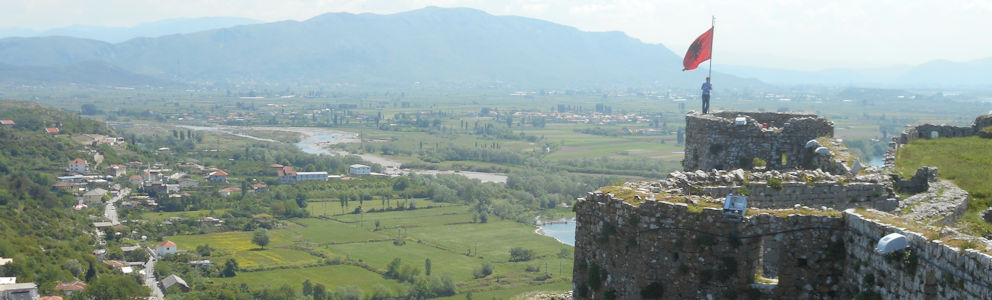
Within the walls, several hundred people still live in traditional Ottoman houses—white houses with orange roof tiles. From the Citadel, we overlook Berat. Across the Osum River lies the Gorica district. From above, it is clear that this district also consists entirely of white houses with small windows, connected by narrow streets. It feels somewhat medieval. It is no coincidence that these districts in Berat, together with the old town of Gjirokaster, are listed as UNESCO World Heritage sites. Back down in the city, we cross the river and walk among the Ottoman houses. One of the houses houses a restaurant. From the first floor, we enjoy our meal with a view of the old town.
 Moldova
  The castle in Soroca dates from the Middle Ages
 The limestone caves house the largest wine collection in the world
 Bosnia and Herzegovina
  The trbacki Buk waterfall in Una National Park
 A perfect spot for a drink
Travelogue A Road Trip Through Europe
Dag 2 | Austria > The Neuschwanstein castle
Dag 3 | Slovenia > The lake of Bled
Dag 4 | Croatia > The Plitvice lakes and Una N.P.
Dag 5 | Bosnia and Herzegovina > The old town of Sarajevo
Dag 6 | Montenegro > The Montenegrin mountains
Dag 7 | Kosovo > Monasteries of Kosovo
Dag 8 | Albania > The ferry to Koman
Dag 9 | Albania > Tirana and Berat
Dag 10 | Albania > The old town Butrint
Dag 11 | North Macedonia > Through the mountains to Ohrid
Dag 12 | North Macedonia > The church of Ohrid
Dag 13 | North Macedonia > The capital Skopje
Dag 14 | Bulgaria > Smoke in the car
Dag 15 | Romania > The old town Veliko Tarnovo
Dag 16 | Romania > The huge parliament building
Dag 17 | Romania > The Dracula castle
Dag 18 | Romania > Climbing Mt Tâmpa
Dag 19 | Moldova > Gagauzia
Dag 20 | Moldova > Driving in the wine cellar
Dag 21 | Moldova > Transnistria
Dag 22 | Romania > The castle of Soroca
Dag 23 | Romania > The beautiful monasteries of Bukovina
Dag 24 | Hungary > Swimming in a cave
Dag 25 | Slovakia > The Tatra mountains
Dag 26 | Slovakia > The wooden houses of Vlkolínec
Dag 27 | Slovakia > The castle of Bratislava
Dag 28 | Czech Republic > Valtice and Lednice
Dag 29 | Germany > The old center of Dresden
Dag 30 | Netherlands > On the way home